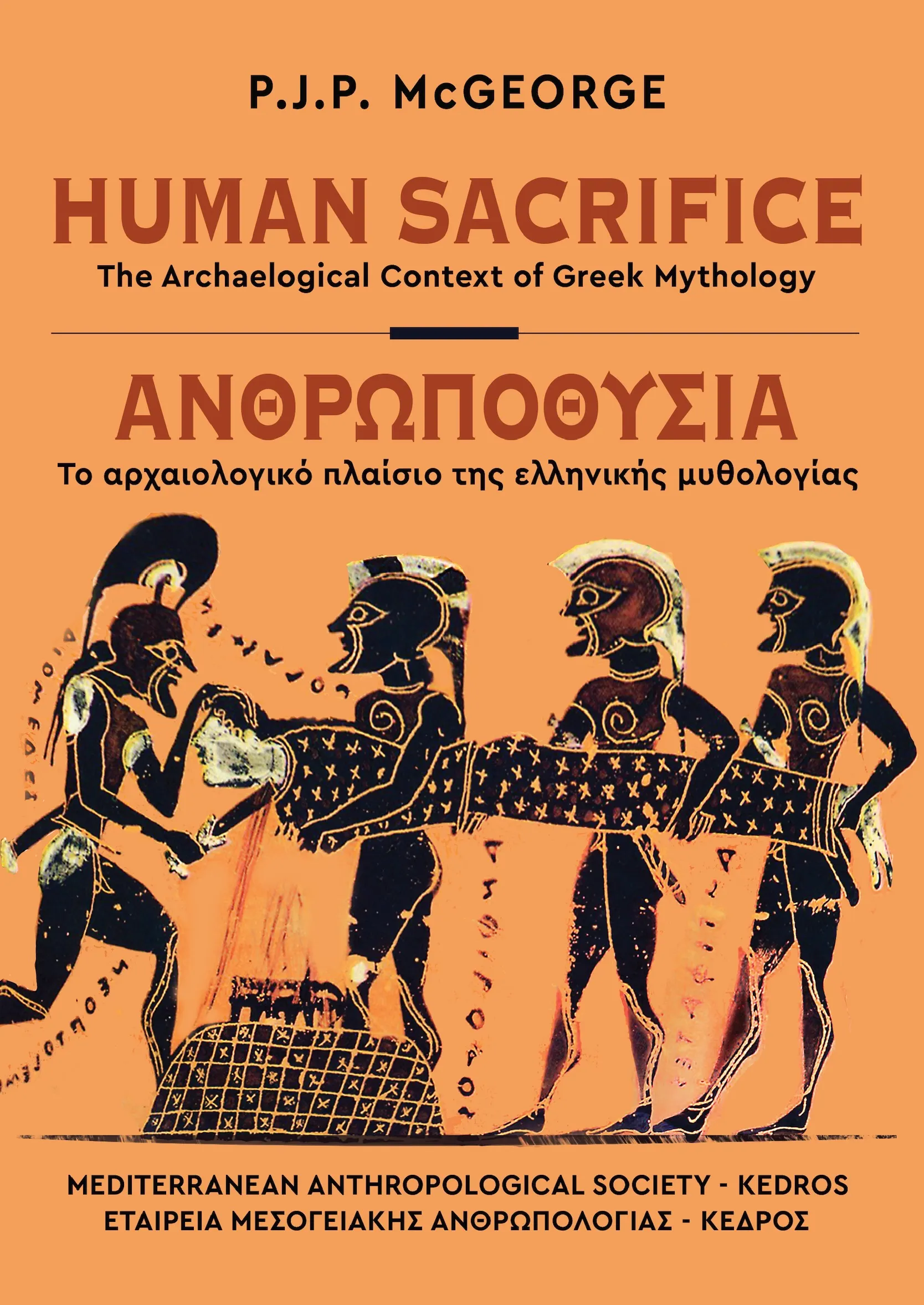
- Authors
- McGeorge, P. J. P.
- Publisher
- Mediterranean Anthropological Society / Kedros
- Year
- 2024
- Pages
- 80
- ISBN
- 978-960-04-5486-4
- Language
- Greek & English
- Dimensions
- 17 × 24 cm
- Binding
- Softcover
- Illustration
- Colour
- Weight
- 192 g
Cite this publication
McGeorge, P. J. P. 2024. Human Sacrifice: The Archaeological Context of Greek Mythology (ΑΝΘΡΩΠΟΘΥΣΙΑ). Athens: Mediterranean Anthropological Society / Kedros. ISBN 978-960-04-5486-4. https://www.kedros.gr/product/9381/human-sacrifice-archaeological-context-greek.html.
McGeorge, P. J. P. (2024). Human Sacrifice: The Archaeological Context of Greek Mythology (ΑΝΘΡΩΠΟΘΥΣΙΑ). Mediterranean Anthropological Society / Kedros. ISBN 978-960-04-5486-4. https://www.kedros.gr/product/9381/human-sacrifice-archaeological-context-greek.html
McGeorge, P. J. P. Human Sacrifice: The Archaeological Context of Greek Mythology (ΑΝΘΡΩΠΟΘΥΣΙΑ). Mediterranean Anthropological Society / Kedros, 2024. ISBN 978-960-04-5486-4.
McGeorge, P. J. P. (2024) Human Sacrifice: The Archaeological Context of Greek Mythology (ΑΝΘΡΩΠΟΘΥΣΙΑ). Athens: Mediterranean Anthropological Society / Kedros. ISBN 978-960-04-5486-4. Available at: https://www.kedros.gr/product/9381/human-sacrifice-archaeological-context-greek.html.
@book{human-sacrifice,
  author = {McGeorge, P. J. P.},
  title = {Human Sacrifice: The Archaeological Context of Greek Mythology (ΑΝΘΡΩΠΟΘΥΣΙΑ)},
  publisher = {Mediterranean Anthropological Society / Kedros},
  address = {Athens},
  isbn = {978-960-04-5486-4},
  year = {2024},
  url = {https://www.kedros.gr/product/9381/human-sacrifice-archaeological-context-greek.html}
}Kydonia, 13th century BC. A catastrophic earthquake, between 6.5 and 7.5 Richter, causes a death toll, while the survivors face shock, utter devastation and social dislocation. In an attempt to pacify the angry chthonic gods, a young woman and forty-nine animals are ritually slaughtered. Mingled human and animal body parts, butchered in precisely the same way, were scattered over the cracked plaster floor of a colonnaded hall and sealed with stones. It is an act of profound humility and piety. The sacrifice was discovered thirty-three centuries later, during excavations of the ancient palatial complex on Kastelli Hill buried deep below buildings in the historic town of Chania. It is the earliest archaeological evidence for a Mycenean Greek form of maiden sacrifice recorded in myths. Until now regarded as fiction, this discovery proves the historicity of myth. Prior to the final decades of the 20th century excavated skeletal remains were rarely retained for study. Without anthropological research, this human sacrifice would have been lost. This book discusses burials from non-cemetery contexts and earlier, previously doubted claims for human sacrifice in prehistoric Crete. The author has been involved since the1970’s in research on Minoan human skeletal remains.